📉 Technical Analysis: Capitulation and Oversold Setup
Synopsys (SNPS) has entered extreme oversold territory after its recent 30% plunge, driven by headline-driven panic selling and legal investigation concerns.
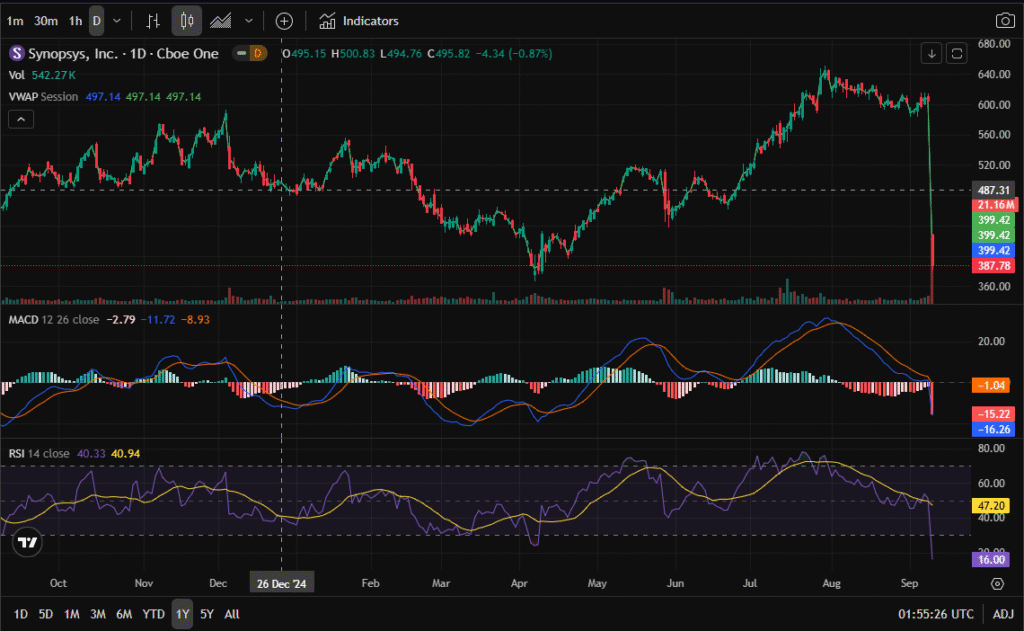
- 1 year Chart:
- RSI collapsed to 16, one of the lowest levels in recent years, signaling capitulation.
- MACD confirms a bearish crossover, with momentum accelerating to the downside.
- Volume spiked to over 20M shares, a classic sign of institutional-level panic selling.
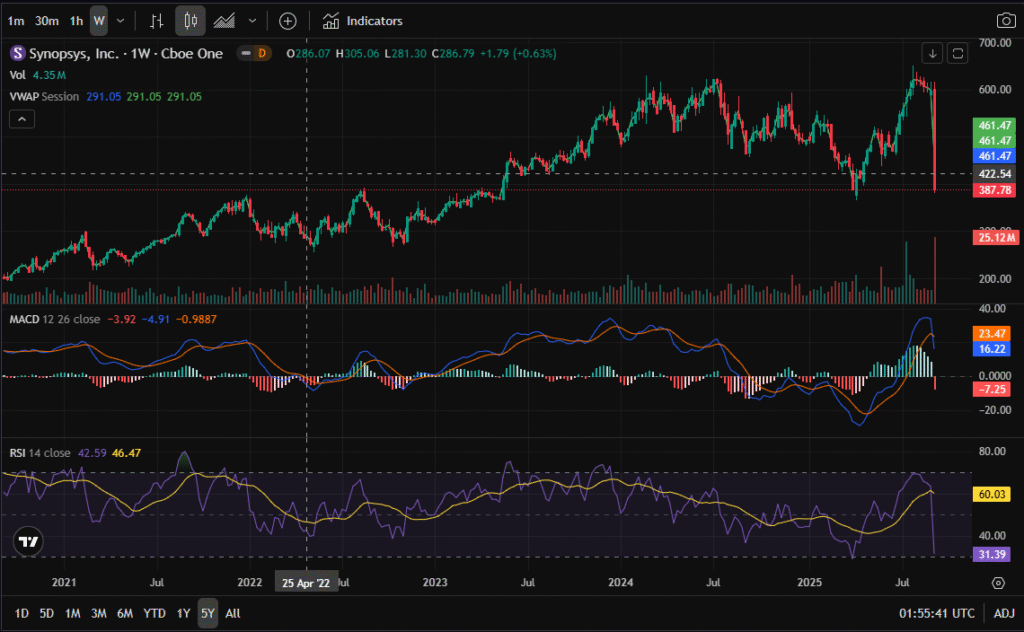
- 5 year Chart:
- RSI is near 31, approaching oversold on the longer timeframe.
- MACD has rolled over, confirming medium-term bearish momentum.
- Price broke below $500 support — next key levels to watch are $460 and $420.
📌 Takeaway: SNPS is technically weak but extremely oversold, often a setup for relief bounces.
📊 Financial Strength: Fundamentals Remain Rock-Solid
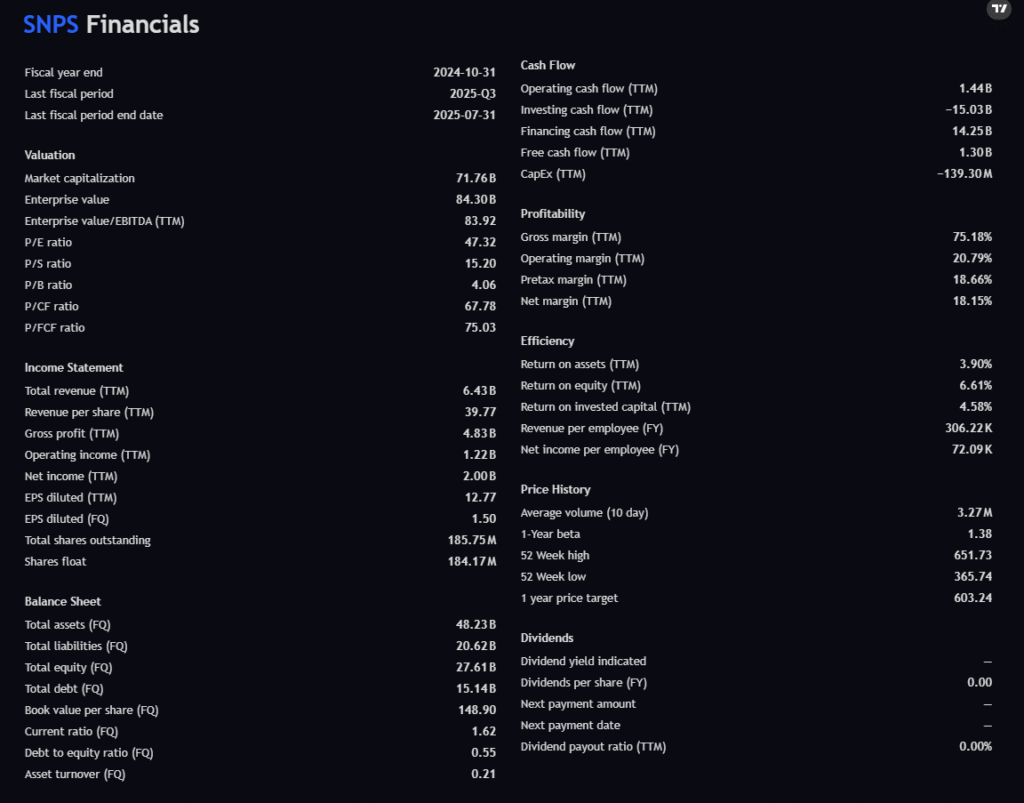
Despite the crash, Synopsys remains one of the strongest players in the semiconductor EDA sector.
- Revenue (TTM): $6.43B
- Net Income (TTM): $2.00B
- Free Cash Flow (TTM): $1.30B (positive and stable)
- Gross Margin: 75.18%
- Net Margin: 18.15%
- Debt-to-Equity Ratio: 0.55 (low leverage)
✅ Synopsys remains highly profitable, cash-generating, and financially sound. The selloff reflects headline risk, not a collapse of fundamentals.
📰 News Flow: Litigation Overhang
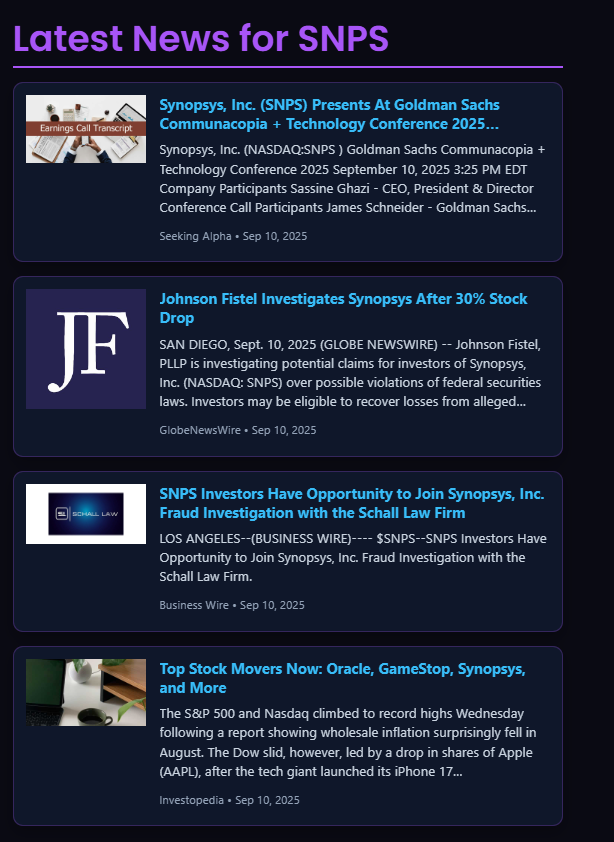
- Sept 10, 2025: Johnson Fistel and Schall Law Firm launched investigations into possible securities fraud after the stock’s 30% drop.
- Investor Conference (Goldman Sachs Communacopia): Management presented, but confidence failed to stabilize the stock.
- Investor Sentiment: Negative — litigation overhang can weigh on valuation multiples for months, even if cases are later dismissed.
📌 Market Implication: Short-term cloud over SNPS, but long-term investors may see opportunity if fundamentals stay intact.
📈 Analyst Targets: Still Above Current Levels
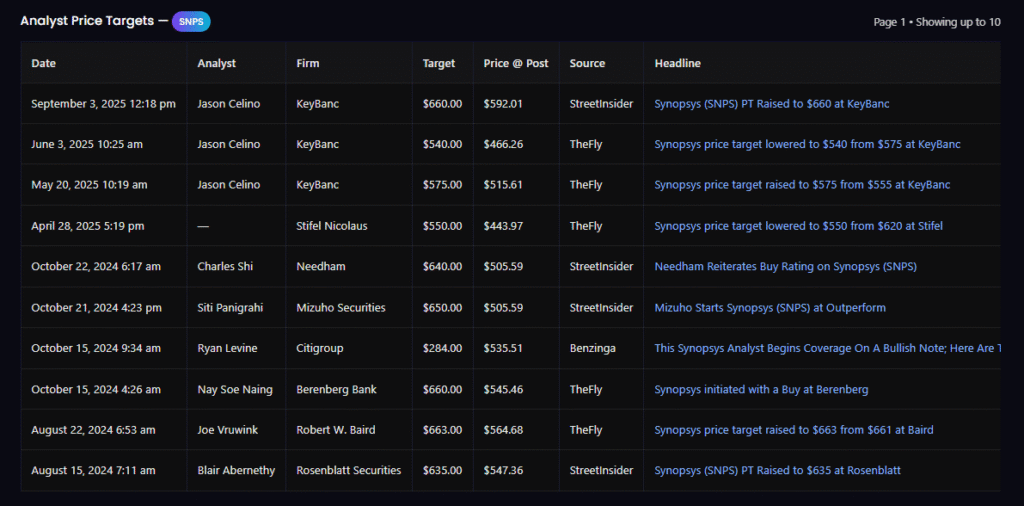
- Most analysts remain bullish, with targets ranging $540–660 from KeyBanc, Needham, Mizuho, and Berenberg.
- Even after the drop, consensus sits far above today’s ~$495 level.
- Outlier: Citigroup’s $284 target reflects bearish caution but remains a minority view.
📌 Gap to Consensus: Current price is 20–30% below Wall Street targets, suggesting undervaluation if litigation risk is resolved.
🔒 Insider & Political Trades
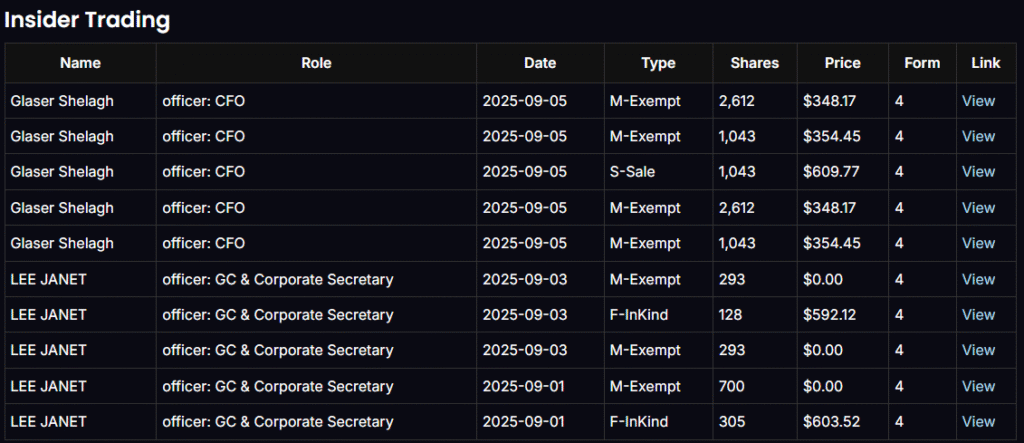
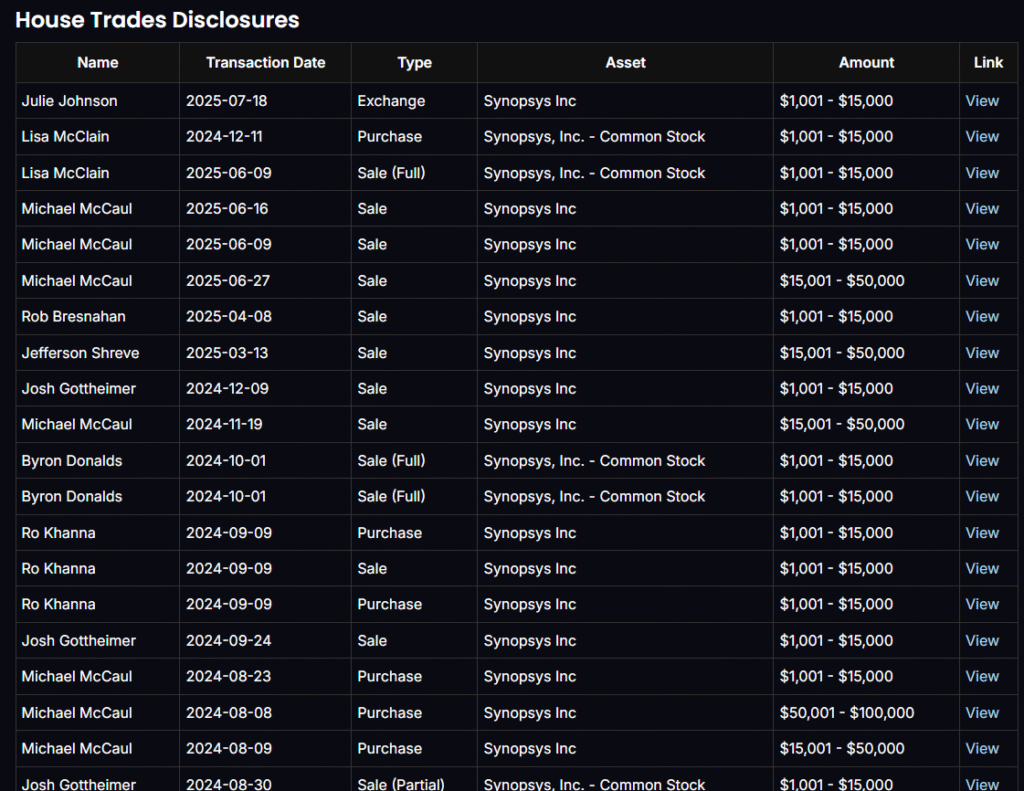
- CFO and Corporate Secretary sold shares at $600+ earlier in 2025, which looks poorly timed given today’s crash.
- House Members (notably Michael McCaul and Byron Donalds) sold Synopsys stock in late 2024 and early 2025, showing reduced conviction.
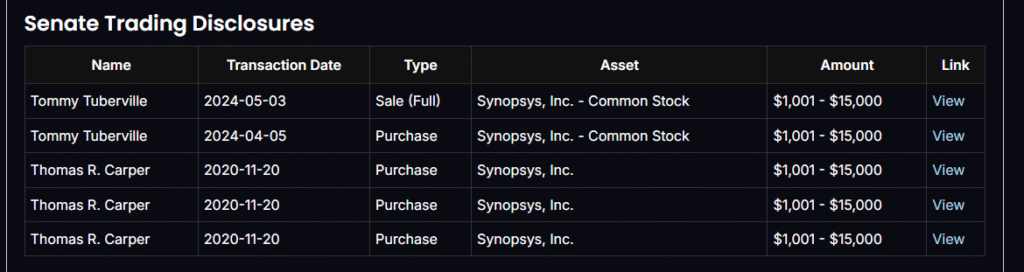
- Senate Trades were smaller and less relevant.
📌 Takeaway: Smart money was exiting near highs — adds caution, but may also mean much of the selling is already behind us.
🎯 Options Strategy: LEAPS Call Play (492 DTE)
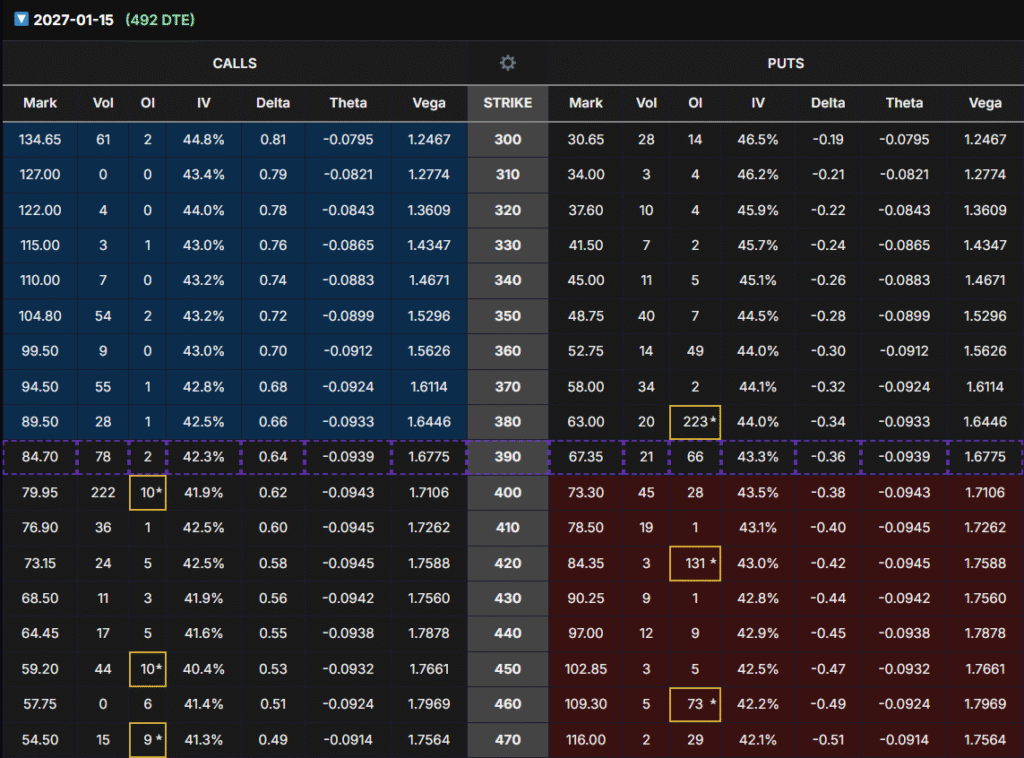
For options traders, Synopsys presents a compelling LEAPS setup:
- Contract Selected: Jan 15, 2027 $460 Call
- Delta: 0.49 → balanced stock-like exposure.
- Vega: 1.7564 → very high, perfect for profiting on IV spikes before catalysts.
- IV: ~41% → relatively low, meaning you’re buying vega cheap.
📌 Trade Thesis:
We’re not betting SNPS needs to recover above $460 immediately. Instead, we’re profiting from vega expansion + delta exposure as volatility rises into earnings or litigation updates.
⚖️ Staged Entry Plan
- First Batch Entry: Current levels (~$495) are attractive for scaling in, given the oversold RSI and panic-driven drop.
- Second Batch Entry: If SNPS falls further toward $460 or even $420, add a second batch to average down and strengthen positioning.
✅ This staged approach reduces risk, avoids overcommitting, and positions traders for upside when volatility inevitably returns.
🧠 Final Takeaway
Synopsys is caught in a headline-driven selloff, but its fundamentals remain strong. The LEAPS strategy offers traders a way to capture gains from volatility rebounds without needing the stock to fully recover. With staged entries, traders can average into strength and reduce downside risk.
⚠️ Disclaimer
This analysis is for informational and educational purposes only. It does not constitute financial, investment, or legal advice. Options trading involves significant risk and may not be suitable for all investors. Always conduct your own due diligence and consult with a licensed financial advisor before making investment decisions. Do not allocate more than 2% of portfolio capital to any single options position. The authors and contributors hold no positions in SNPS at the time of publication.